Originally published in 2015; updated in August 2026.
There are Oregon stories that sound a little exaggerated by the time they reach you. Maybe they have been polished over years of campfire retellings, or perhaps someone added a detail that was simply too good to leave out. The exploding whale of Florence is not one of those stories. On a cool November day in 1970, state highway workers really did place half a ton of dynamite beneath a dead sperm whale, and a television crew really did capture what happened next.
The footage has everything a strange chapter of Oregon history could ask for: a windswept beach, a crowd gathered at what seemed like a safe distance, an engineer explaining the plan with confidence, and one enormous explosion that solved almost nothing. Pieces of whale sailed over the dunes, spectators scrambled for cover, and a new Oldsmobile ended the afternoon with its roof crushed beneath a slab of blubber. Somehow, and very fortunately, no one was seriously injured.
A very large problem washes ashore near Florence
The story began on November 9, 1970, when a dead sperm whale came ashore on a beach south of Florence. It measured about 45 feet long and weighed roughly eight tons, which made moving it in one piece nearly impossible. The carcass soon began to decompose, and the smell drifting across the sand announced the problem long before anyone could see it.
Florence was already the sort of coastal community where the forest, dunes and Pacific seemed to meet at the edge of town. The arrival of a whale might have been a remarkable natural event under different circumstances, but this animal had been dead for days and was becoming a public nuisance. Curious visitors were coming to look, and officials worried that the carcass could rupture or that someone might climb onto it and get hurt.
Responsibility landed with the Oregon State Highway Division, the agency now known as the Oregon Department of Transportation. Oregon's beaches were considered part of the state highway system, which meant a stranded whale could become a highway department problem. Assistant District Highway Engineer George Thornton was placed in charge of finding a solution to a situation that did not appear in any ordinary road maintenance manual.
The plan involving half a ton of dynamite
Officials had only a few practical options. Cutting the whale apart would have been an awful and labor intensive job, while burying it required equipment capable of digging a large enough hole in wet coastal sand. After consulting with Navy and munitions experts, Thornton decided that explosives could break the carcass into pieces that gulls, crabs and other scavengers would finish removing.
The whale was treated much like an enormous boulder blocking a road. Workers placed 20 cases of dynamite, approximately 1,000 pounds in total, beneath the landward side of the carcass. The charge was positioned with the hope that the explosion would push most of the remains toward the ocean while reducing the rest to manageable pieces.
Not everyone watching the preparations felt reassured. Springfield businessman Walter Umenhofer had military explosives training and believed the charge would produce large, dangerous fragments rather than the small pieces officials expected. He reportedly warned the crew, then moved himself well away from the blast area. His recently purchased Oldsmobile remained parked about a quarter mile from the whale, a distance that seemed more than generous at the time.
A quiet beach becomes Oregon's strangest news scene
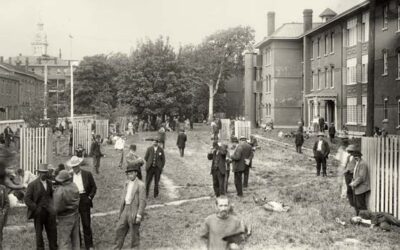
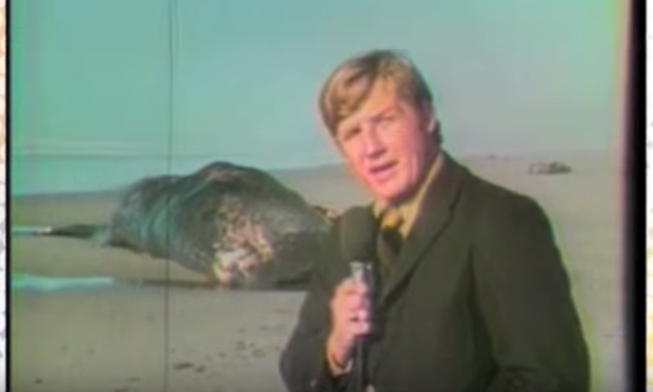
By Thursday, November 12, word of the unusual disposal plan had traveled around Florence. Spectators gathered on the dunes while Portland television station KATU sent reporter Paul Linnman and cameraman Doug Brazil to cover the operation. It was an odd assignment, but no one standing on that beach could have known they were about to create one of the most enduring pieces of local news footage in American history.
The blast itself was spectacular. Sand, smoke and whale rose in a towering cloud as the crowd cheered from the dunes. A moment later, the mood changed when dark pieces began dropping out of the sky and landing with heavy thuds across the beach.
The whale had not disappeared. The explosion had torn it into chunks, but many were far larger than anticipated, and one piece sailed far enough to flatten the roof and passenger compartment of Umenhofer's Oldsmobile. Smaller fragments landed around spectators and the news crew, leaving people to dodge falling remains while enduring a smell that television could never fully communicate.
The cleanup still had to be finished after the excitement ended. Scavengers showed little interest in the oversized pieces scattered across the sand, so highway crews buried much of the remaining carcass. The plan had transformed a single unpleasant object into a much wider and messier problem, but the lack of serious injuries allowed the incident to become a source of humor rather than tragedy.
The original KATU report is unforgettable
Linnman's calm narration is part of what makes the report so memorable. The segment moves from the careful preparation of the explosives to the confidence of the crew, then abruptly into an explosion that looks unlike almost anything else captured by a local television station. Brazil's film records the cloud rising over the beach, the crowd's changing reaction and Umenhofer standing beside the car he had tried to protect by parking far away.
For decades, most people watched fuzzy copies that had been duplicated and passed around online. In 2020, the Oregon Historical Society made a new 4K transfer from the original 16 mm film for the explosion's 50th anniversary, and KATU released a restored version of the report. The sharper footage gave an old Oregon legend fresh life and introduced the story to another generation.
From local mishap to worldwide legend
The exploding whale was well known around Oregon almost immediately, but it took another two decades to reach a truly enormous audience. Humor columnist Dave Barry wrote about the incident in 1990 after seeing a copy of the report, and his column inspired readers across the country to search for the footage. As home internet access grew, the clip moved through message boards, email chains and early video sharing sites.
People unfamiliar with Oregon often assumed the story had to be an urban legend. It contained too many perfect details, from the enormous dynamite charge to the expert whose warning went unheeded and the car crushed at what should have been a safe distance. Yet news film, newspaper accounts and state records all confirm the essential facts, making this one of those rare stories that becomes more astonishing when you learn it is true.
Offbeat Oregon History writer Finn J.D. John helped preserve the human details of the event, including Umenhofer's warnings and the reactions of people involved. His reporting drew on Paul Linnman's book, Springfield newspaper archives and the Eugene Register Guard's coverage from November 1970. Those accounts give the familiar video a richer sense of place and remind us that this was not a comedy sketch, but a real afternoon on a real Oregon beach.
Florence finally embraces the whale
For years, some Florence residents were understandably weary of having their beautiful coastal town reduced to a punchline about airborne blubber. Florence has far more to offer, including Old Town, the Siuslaw River Bridge, nearby lakes and easy access to the Oregon Dunes. Still, time has softened the embarrassment, and the exploding whale has become part of the community's wonderfully unconventional history.
In 2020, residents voted to name a public space along the Siuslaw River Exploding Whale Memorial Park. The park is not the original blast site, which was on the beach south of town, but its name gives travelers a reason to smile while enjoying the riverfront. It also proves that Oregon communities are capable of looking back at an old mistake with humor and a certain amount of affection.
If the story inspires a trip, use our Florence travel guide to plan more of your visit. You can walk through Old Town, explore the dunes, look for sea lions and spend time along a stretch of the Oregon Coast where every bend in Highway 101 seems to reveal another reason to pull over.
What really happened to Oregon's exploding whale?
The basic facts have remained remarkably consistent. A roughly 45 foot sperm whale washed ashore near Florence on November 9, 1970, and the Oregon State Highway Division attempted to dispose of it three days later with approximately half a ton of dynamite. The explosion scattered remains across the beach, damaged Umenhofer's car and left crews with more cleanup work, but it caused no reported serious injuries.
The whale is sometimes incorrectly described as a gray whale, partly because the original television report used that identification. Historical accounts now identify it as a sperm whale. Another common misconception places the explosion at the present memorial park, although the blast occurred on an ocean beach south of Florence rather than along the Siuslaw River.
An Oregon story that refuses to fade
More than 55 years have passed, yet the scene remains instantly recognizable to many Oregonians. The event sits at a peculiar intersection of history, humor and hometown lore, preserved with an immediacy that written records alone could never match. You can watch the plan take shape, hear the confidence in the voices and see the exact moment everyone realizes the day has taken a very different turn.
There is also something distinctly Oregon about the way Florence has made peace with the story. The community did not erase an embarrassing chapter or pretend the joke belonged to somebody else. It eventually gave the whale a park, kept the story alive and allowed one of the state's strangest mishaps to become an affectionate reminder that even the most confident plans can go spectacularly sideways.
Sources and further reading
- Offbeat Oregon History: Exploding Whale? It's a True Oregon Tale, by Finn J.D. John
- The Oregon Encyclopedia: Florence Whale Explosion
- Oregon Historical Society film record
- City of Florence: Exploding Whale Memorial Park
- The Exploding Whale: Original and restored video history
Did you grow up hearing about Oregon's exploding whale, or is this your first time watching the footage? Share your memories and reactions in the comments.